
research · demo
The Residence Zanzibar
- Location
- Kizimkazi, South-west Zanzibar
- Year
- 2022–2023
- Area
- 8,000 m²
- Client
- The Residence Zanzibar
- Services
- design · implementation · maintenance · training
- Status
- Complete (1-year build, in active use)
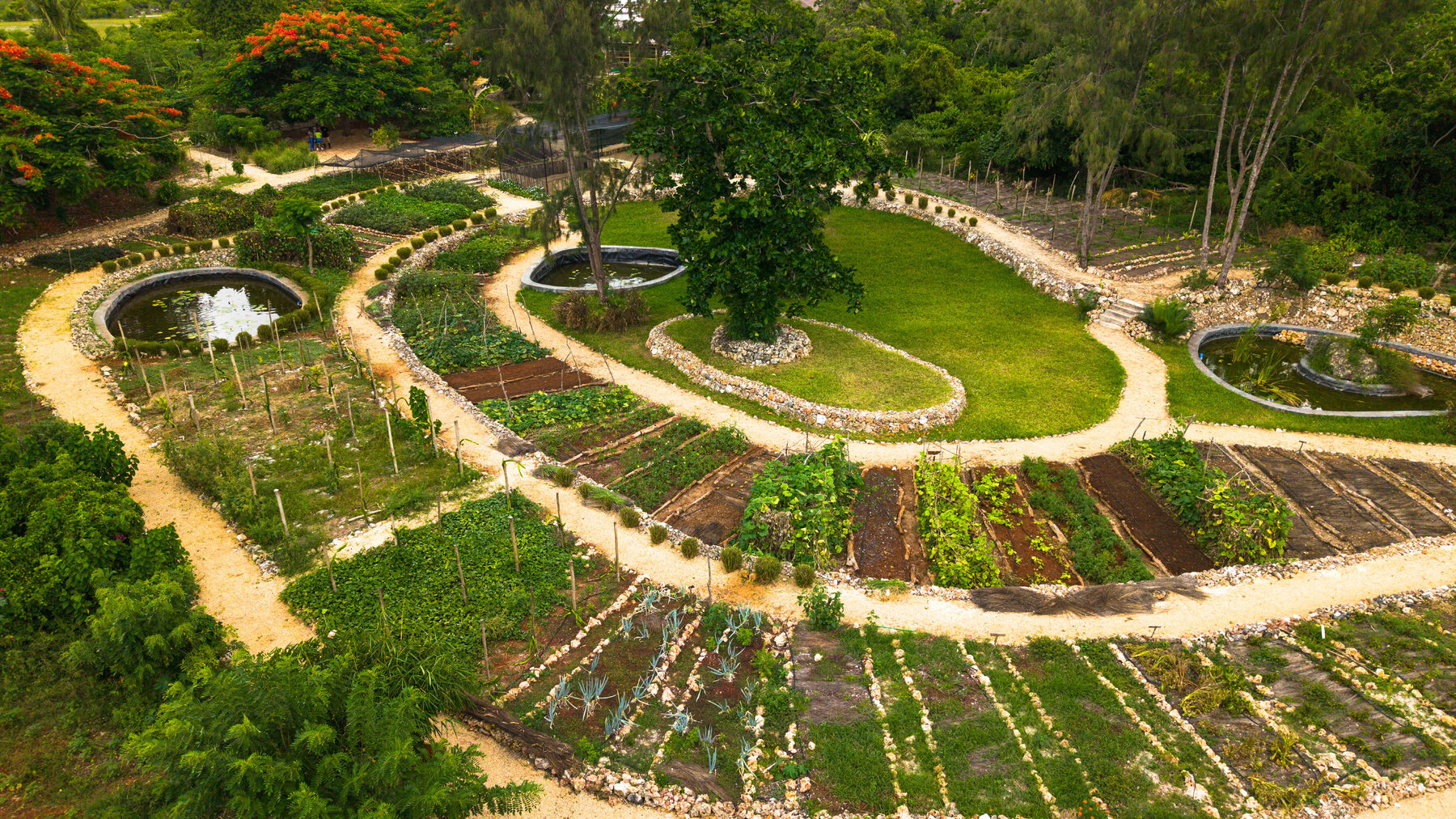
An 8,000 m² former waste-disposal site on the grounds of a luxury hotel, transformed in one year into a regenerative, productive paradise that anchors the resort's farm-to-table programme and its guest sustainability experience.
Context
The Residence Zanzibar wanted to align its eco-luxury ethos with something tangible on the ground. The site available for the work was the resort's old waste-disposal area - degraded, compacted, and unloved.
Challenge
To turn the part of the property guests were never meant to see into the part they would specifically come to visit, while shortening the kitchen's supply chain and giving the resort a credible, on-site sustainability story.
Design strategy
- Regenerative framework. Soil revival on the degraded substrate, water wisdom across the site's drainage, and zero-waste systems closing the loop between kitchen and garden.
- Edible trails. Guest paths that wind through the productive gardens with interpretive signage, turning a walk into a foraging lesson.
- Educational nodes. Interactive stations - including a Meet Our Worms vermiculture station - that turn the back-of-house into a soft classroom.
- Closed-loop production. Permaculture gardens, aquaponics ponds, vermiculture, pollinator flower beds, and a dedicated chef's garden.
- Staff training. Resort gardeners trained on-site over the year-long build so the system can be tended without us.
“From wasteland to wonderland - this garden doesn't just feed guests, it feeds their curiosity about living lightly on the earth.”
- The Residence Zanzibar
Lessons from the land
Kitchen waste reduction through composting, 50+ plant varieties supporting biodiversity, and a farm-to-plate distance measured in metres rather than kilometres. The project proves how hospitality can heal degraded land while turning sustainability into an experience guests want to share.